
Response to Climate Change

- Home
- Environment
- Response to Climate Change
Response to Climate Change

- Copied
Nature and Climate Risk Assessment
Extreme weather may lead to instability in the supply and quality of agricultural and livestock raw materials, thereby affecting raw material costs and procurement stability. Hsin Tung Yang focuses on the impacts and challenges that nature and climate change bring to the food industry. With reference to the frameworks of the "Task Force on Climate-related Financial Disclosures (TCFD)" and the "Task Force on Nature-related Financial Disclosures (TNFD)," the Company has also developed three major response strategies: "Product Development Diversification," "Development of Alternative Raw Materials," and "Value Chain Risk Diversification."
Management and Oversight Governance Mechanism for Climate- and Nature-Related Issues
Assessment and Management Processes and Mechanisms for Climate and Nature-Related Risks and Opportunities
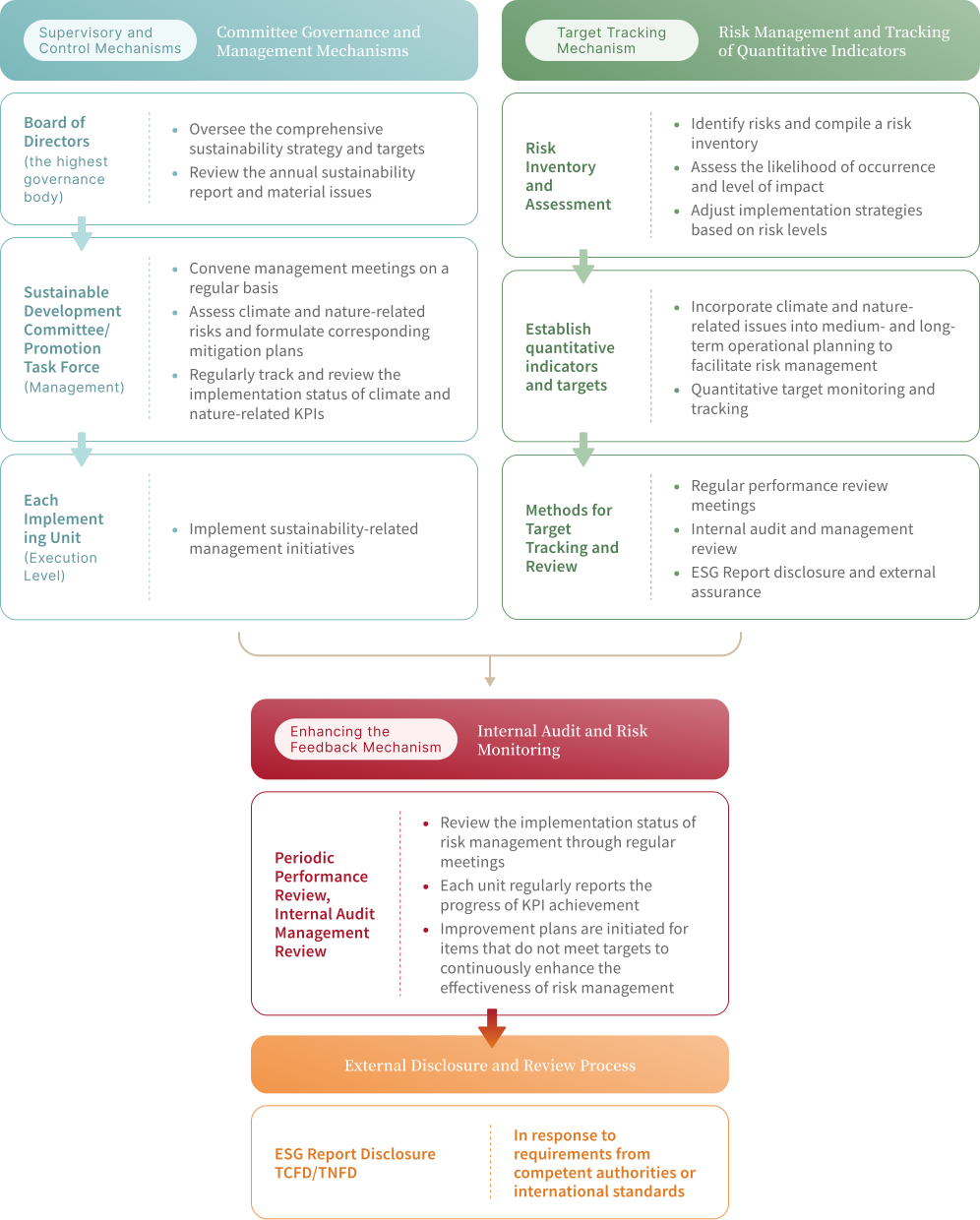
Enhancing Sustainability Governance and Risk Control
Hsin Tung Yang’s highest governance body has incorporated climate and nature issues into its operational decision-making. The Sustainable Development Committee is responsible for assessing risks and opportunities and formulating strategies, which, once approved, are implemented in medium- and long-term plans. The Board of Directors reviews sustainability performance on a regular annual basis. In terms of risk management, in addition to tracking material risks and regulations quarterly, the Company has established a real-time notification mechanism to comprehensively ensure that operational development and sustainability goals advance steadily in parallel.
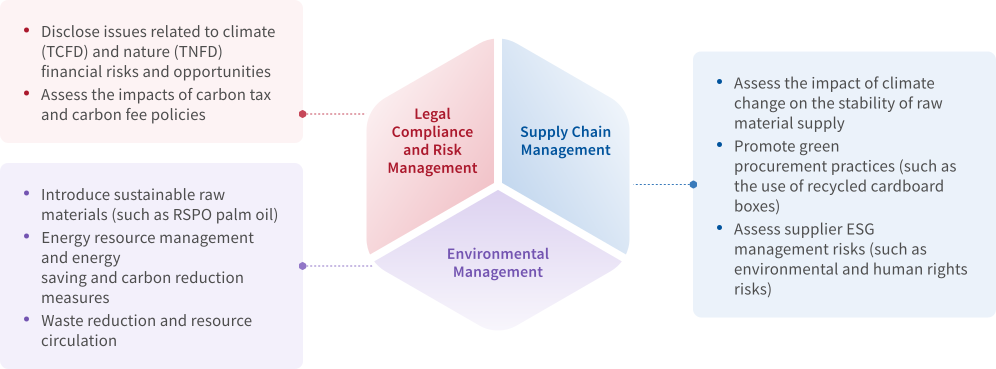
Integrating Climate and Nature Considerations into Operational Strategy: Three Key Management Dimensions
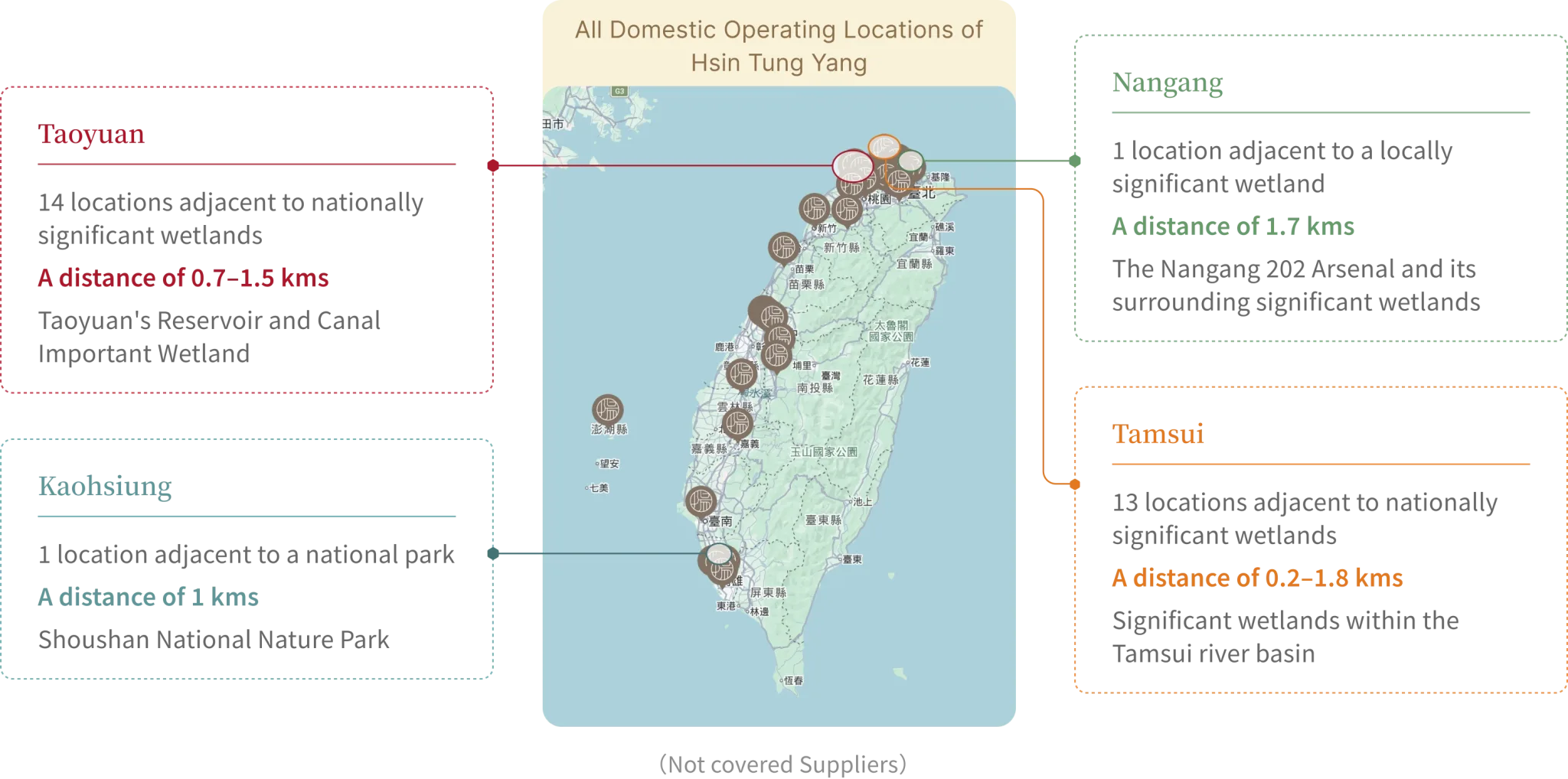
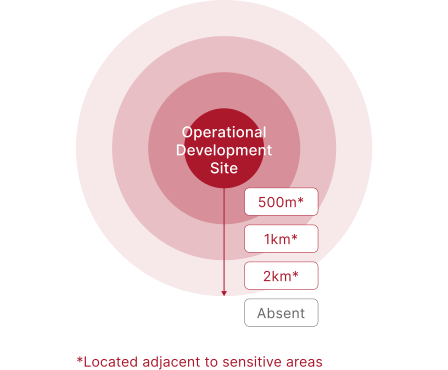
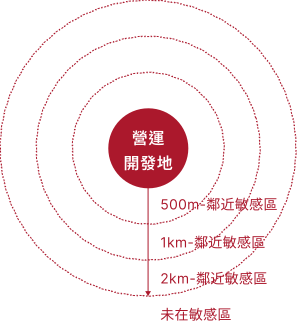
Locate: Location Analysis of Operating Sites in Biodiversity-Sensitive Areas
Analysis results show that operating sites located within 500 meters to 2 kilometers of a sensitive area account for 46% of all operating sites.
| Taoyuan | |
|---|---|
| Service Location | Distance (km) |
| SOGO Zhongli Department Store Counter (Retail Outlet) | 0.7 |
| Zhongli Branch No. 1 (Retail Store) | 1.4 |
| Phase 1 Food Court Taiwan Specialty Products Collection (Airport Shopping Mall Store) | 1.5 |
| Phase 1 Chen Hao Shih Inn Hakka Restaurant (Airport Shopping Mall Store) | 1.5 |
| Phase I Indigenous Fine Arts and Crafts Exhibition and Sales Area (Airport Shopping Mall) | 1.5 |
| Phase I Travel and Cultural Creative Lifestyle Center (Airport Shopping Mall) | 1.5 |
| Phase I Exhibition and Sales Area for Popular Local Specialty Products (Airport Shopping Mall) | 1.5 |
| Phase I Formosa Delicacies Specialty Street (Airport Shopping Mall) | 1.5 |
| Phase I Taiwan Specialty and Handicraft Exhibition and Sales Pavilion (Airport Shopping Mall) | 1.5 |
| Phase I Traveler's Boutique (Airport Shopping Mall) | 1.5 |
| Phase I Zhen-Ching Feng-Wei Store (Airport Shopping Mall) | 1.5 |
| Phase I Food Court (Airport Shopping Mall) | 1.5 |
| Phase I Taiwan Specialty Products Pavilion (Airport Shopping Mall) | 1.5 |
| TaiMall Taoyuan Concession (Department Store Counter) | 1.5 |
| Tamsui | |
|---|---|
| Service Location | Distance (km) |
| Tamsui Branch (Retail Location) | 0.2 |
| Dihua 100 (Retail Store) | 0.3 |
| Sanchong Branch (Retail Location) | 0.3 |
| Sanchong Office (Business Location) | 0.4 |
| Yonghe Branch (Retail Location) | 0.5 |
| Xining Branch (Retail Location) | 0.5 |
| Wuchang Branch (Retail Location) | 1 |
| Shin Kong Mitsukoshi Taipei Main Station Front Store (Department Store Counter) | 1.1 |
| Shin Kong Mitsukoshi Nanjing Store (Department Store Counter) | 1.5 |
| Xinyi Branch (Retail Location) | 1.6 |
| Banqiao Branch No. 2 (Retail Location) | 1.6 |
| Banqiao Branch No. 1 (Sales Office) | 1.6 |
| Linsen Branch No. 1 (Retail Location) | 1.8 |
Evaluate: Evaluation of Nature- and Climate-Related Risks and Opportunities Analysis
Hsin Tung Yang refers to and applies the World Wide Fund for Nature (WWF) Biodiversity Risk Filter to conduct industry and regional analyses. The results indicate the following:
Dependency Factors
Based on regional and industry characteristics, Hsin Tung Yang integrates assessments from two databases and identifies factors rated within the highest category (Very High) as dependency factors for internal management. These factors include biomass supply, water purification, pest and disease control, and media review.
| ID | WWF Indicators | Score (Dayuan Plant) | Score (Store Average) | ENCORE Category | Rating |
|---|---|---|---|---|---|
| 1.2 | Forest Productivity | N/A | N/A | Biomass Supply | Very High |
| 2.2 | Water Conditions | 3.64 | 2.59 | Water Purification | Very High |
| 3.3 | Pests and Diseases | 4.5 | N/A | Biological Control | Very Low |
| 8.1 | Media Review | 5 | 4 | - | - |
Impact Factors
Due to Hsin Tung Yang’s relatively simple business model, the impact factor used for internal management is the category with the highest rating (Very High). Accordingly, pollution pressure is the only impact requiring internal monitoring.
| ID | WWF Indicators | Score (Dayuan Plant) | Score (Store Average) | ENCORE Category | Rating |
|---|---|---|---|---|---|
| 5.4 | Pollution Pressure | 3.75 | 3.73 | Nutrient Emissions (Nitrogen and Phosphorus) | Very High |
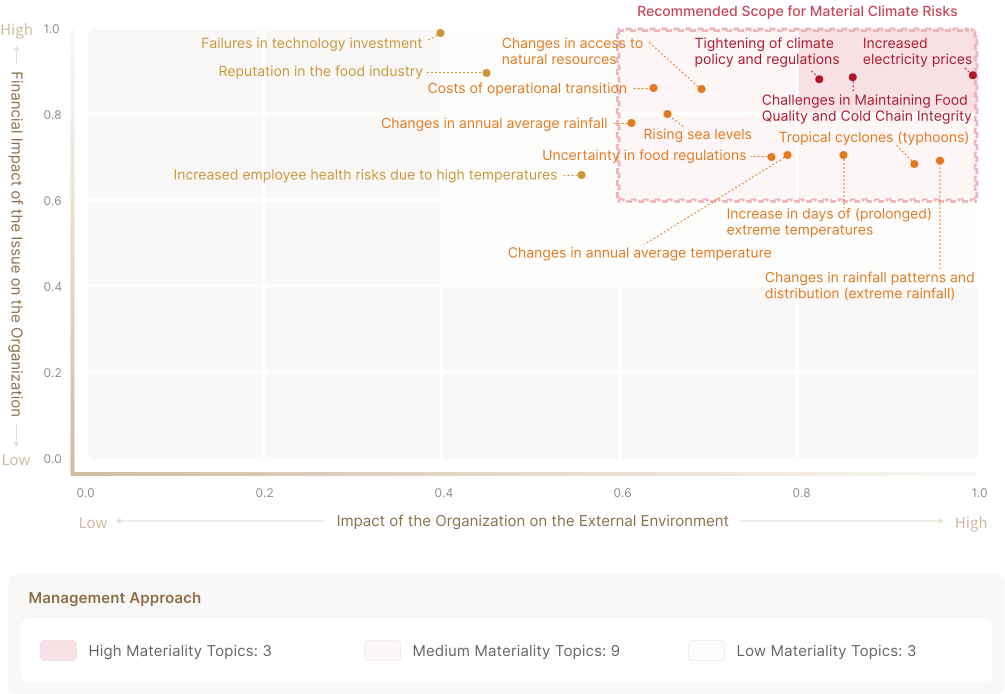
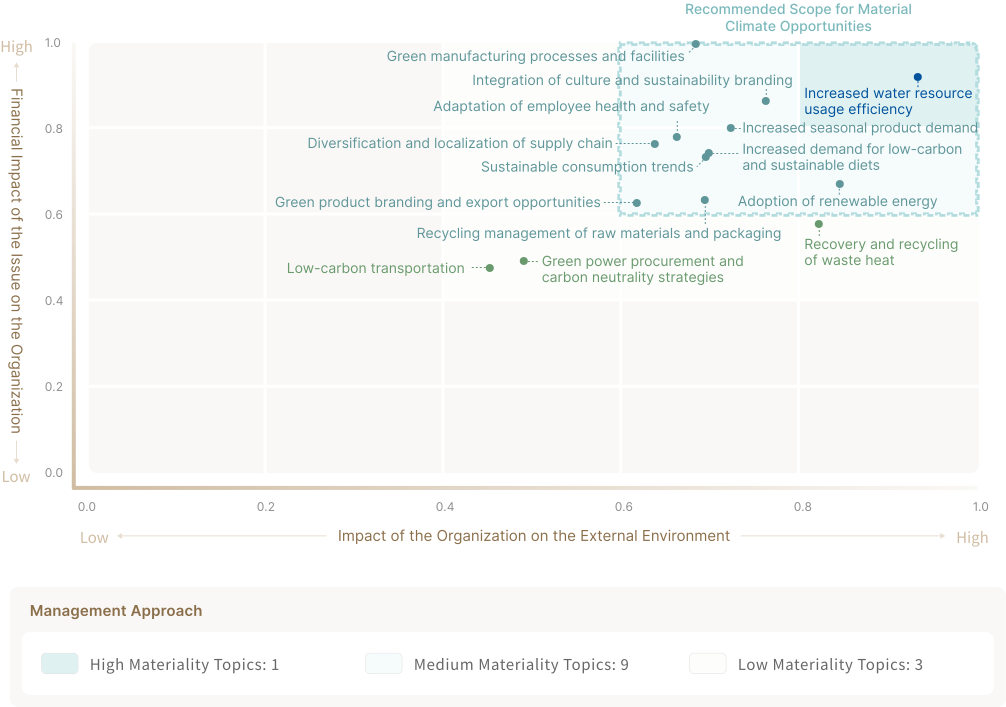
Materiality Matrix
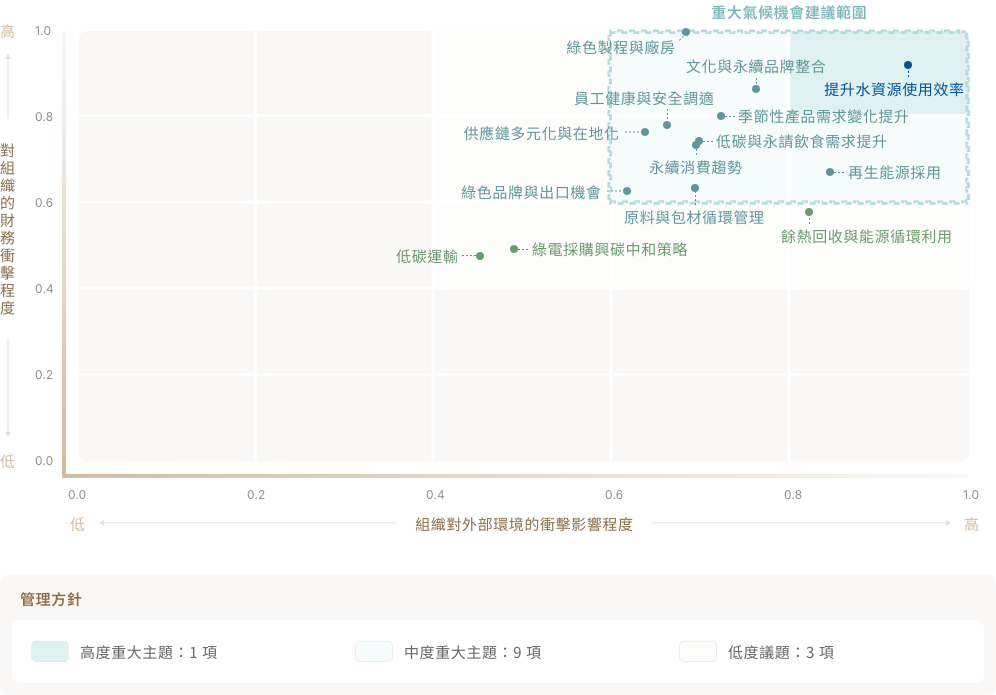
Results of Hsin Tung Yang’s Identification of Material Climate Risk Issues Based on TCFD
Results of Hsin Tung Yang’s Identification of Material Climate Opportunity Issues Based on TCFD
Assess: Assess Natural Risks and Opportunities Through Scenario Analysis
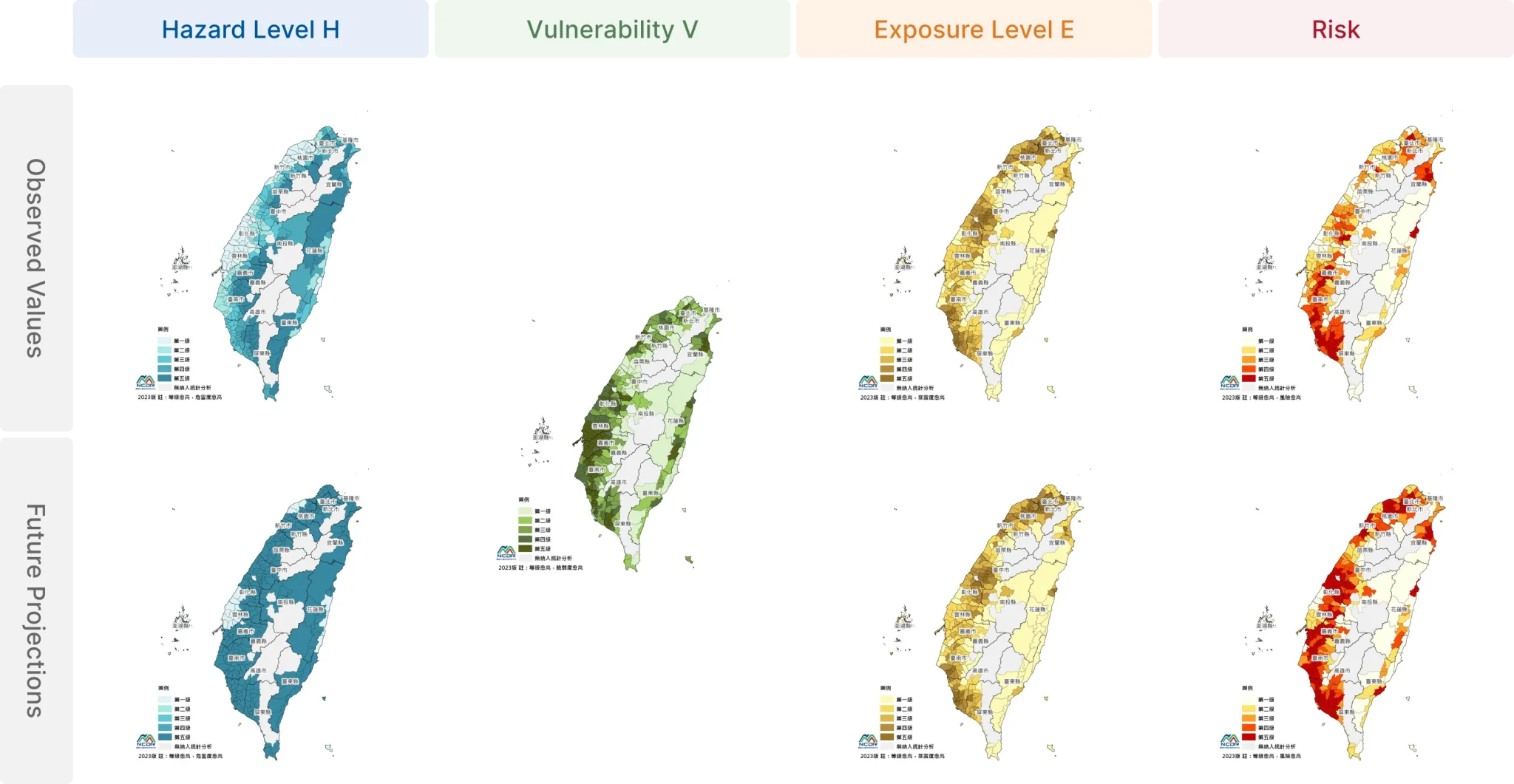
Hsin Tung Yang conducts climate change disaster risk assessments through the "Climate Change Disaster Risk Adaptation Platform." The risks are primarily categorized into two major types: "flooding" and "slope land" risks. A tiered assessment is conducted for hazard and vulnerability.
Comprehensive Flood Disaster Risk Map
| Hsin Tung Yang Risk Results | |||
|---|---|---|---|
| Database Name | Risk Result | ||
| Climate Change Disaster Risk Adaptation Platform | Flood Risk Map | Level 5 | |
| Flood Hazard Level | Level 4 | ||
| Flood Vulnerability Level | Level 3 | ||
| Flood Hazard Exposure Level | Level 4 | ||
| Slope Land Risk Map | Level 2 | ||
| Slope Land Hazard Level | Level 2 | ||
| Slope Land Vulnerability | Level 2 | ||
| Slope Land Hazard Vulnerability Level | Level 2 | ||
| Ministry of Economic Affairs Geological Data Integration and Query System | Soil Liquefaction Potential | High-Risk Areas | Shin Kong Mitsukoshi Nanjing Store Counter, Xinyi store, Sanchong store, Sanchong office, Linsen Branch No. 1 and Siwei Branch |
| Active Faults | Adjacent to Active Faults | Nantou Service Area, Dongcaotun Rest Stop | |
| Disaster Risk Statistics by Location | ||
|---|---|---|
| Disaster Type | Indicator | Number of Locations |
| Flooding | Flood Risk Map | 55 |
| Flood Hazard Level | 54 | |
| Flood Vulnerability Level | 1 | |
| Flood Hazard & Vulnerability Level | 27 | |
| Slope Land | Slope Land Risk Map | 6 |
| Slope Land Hazard Level | 9 | |
| Slope Land Vulnerability | 1 | |
| Slope Land Hazard Vulnerability Level | 3 | |
Prepare: Develop Action Strategies and Targets for Addressing Natural and Climate Risks and Opportunities
Hsin Tung Yang follows the TCFD and TNFD frameworks to gradually establish management mechanisms for indicators and targets related to climate and nature risks and opportunities. These mechanisms serve as important assessment and management foundations for understanding the impacts of operational activities on the climate and natural environment. Hsin Tung Yang reviews target achievement annually to enhance its operational resilience in addressing climate and nature risks and opportunities.
| Analysis of the Relationship Between Natural and Climate Risks and Opportunities and Hsin Tung Yang | ||
|---|---|---|
| Impact Item | Action Plan | |
| Risks | Increasingly stringent climate policies and regulations |
|
| Challenges in food quality and cold chain preservation |
| |
| Rising electricity prices |
| |
| Opportunities | Improve water resource use efficiency |
|
- Copied